
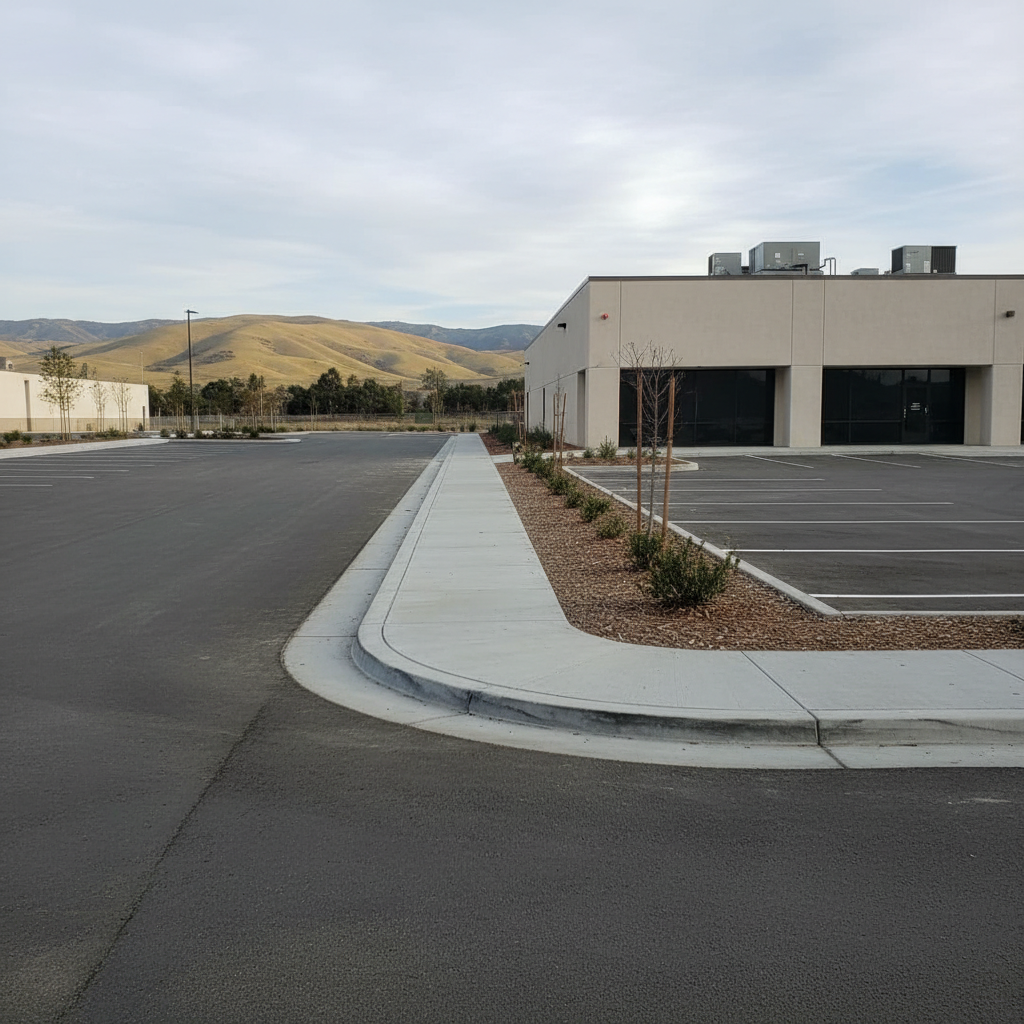
Lodi keeps concrete crews busy. Downtown streets near Pine and Church still have sidewalk panels original to the 1940s and '50s, heaved up by sycamore and elm roots, and those need repair work that respects the existing grade. Out toward Victor Road and the newer subdivisions on the east side, crews are pouring fresh driveways and patios on lots that were vineyard or orchard ground fifteen years ago. Both jobs are concrete. They're not the same job. Here's how to sort a contractor who knows that from one who's just good at writing a low number on a bid sheet.
Check the License Before You Check the Price
In California, concrete flatwork falls under the C-8 classification from the Contractors State License Board. Ask for the license number and look it up yourself at cslb.ca.gov before you talk numbers. The site shows whether the license is current, what bond is on file, and whether there's a history of complaints or suspensions. A contractor who hesitates when you ask for this, or who tells you a relative's license covers the work, is telling you something. Also ask for proof of general liability and workers' comp. If a laborer gets hurt on your property and there's no comp coverage, that liability can land on you.
California also caps the down payment on a home improvement contract at $1,000 or 10% of the total price, whichever is less. If someone asks for half up front, or wants it in cash only, that's not how this is supposed to work.
Read the Bid Like It's an Engineering Document, Not a Price Tag
Two bids can both say "4-inch driveway slab" and mean completely different things underneath. A real bid should tell you how many inches of class 2 road base go down and how it's compacted, not just dumped and smoothed by hand. It should say rebar or wire mesh, and for a driveway or garage floor carrying vehicle weight, you want rebar, typically #3 or #4 bar on an 18 to 24 inch grid, not mesh that gets kicked to the bottom of the pour and does nothing once it's buried. It should name a concrete mix, usually 3,000 to 4,000 psi for residential flatwork, and a slump in the 4-inch range for workability without the mix being so wet it weakens the cure. If the bid just says "pour a driveway" with a dollar figure next to it, you don't know what you're buying.
The Ground Here Isn't the Same Everywhere
San Joaquin County soil varies more than people expect across just a few miles. Closer to the Mokelumne River you get sandier, free-draining soil, which is part of why this is grape country. Head out toward the edges of the valley floor and you run into heavier clay pockets that swell when wet and shrink hard when dry, which is exactly the kind of ground that cracks a slab poured without enough base rock or without control joints spaced correctly. A contractor who's worked here knows which streets in Lodi tend toward clay and adjusts the base depth and joint spacing without you having to ask.
The weather matters just as much as the dirt. Lodi summers routinely sit over 100°F through July and August, and concrete poured in that heat sets up fast, sometimes too fast, which is why a good crew pours early in the morning in summer and may use a retarder in the mix to keep working time reasonable. Winter is the opposite problem. The rainy season runs roughly November through March, and tule fog keeps things cold and damp for days at a stretch. Pouring over saturated or still-wet subgrade is how you get a slab that settles unevenly six months later. A contractor who tells you "we're not pouring this week, the base is too wet" isn't stalling. That's the right call.
What Happens After the Pour Is Half the Job
Fresh concrete doesn't decide where it's going to crack, you do, by cutting control joints before it cracks on its own. For a driveway that usually means joints every 8 to 10 feet, cut within 6 to 12 hours with an early-entry saw, or within 24 to 48 hours with a conventional saw blade. Skip that step or wait too long and the slab finds its own crack line, usually right down the middle of a panel where you'll see it every day.
Cure time is the other thing people rush. You can usually walk on a new slab after 24 to 48 hours. Driving a car on it needs more, typically 7 days minimum, and the concrete isn't at its full design strength until around 28 days. A contractor who tells you to pull your car onto a new driveway the day after the pour is either misinformed or doesn't care what happens to your slab in month two. Grading matters here too. Water should pitch away from the house at about 1/8 inch per foot, and on a lot with any clay content, getting that wrong means standing water against the foundation every time it rains.
Permits and Inspections Aren't Optional Extras
Work that touches the public right-of-way, a sidewalk, curb cut, or driveway approach, generally needs a permit through the City of Lodi building division, and often an encroachment permit if the work extends into city property. Unincorporated areas around Lodi go through San Joaquin County instead. A straightforward backyard patio inside your own property line may not need the same review, but foundation work, additions, and anything connected to drainage usually does. Expect a pre-pour inspection where the inspector checks the forms, the base, and the rebar placement before any concrete goes down, which is exactly why rushing a pour to beat an inspector is a bad sign, not a time-saving one. HOAs are common in the newer subdivisions east of town and often have their own rules on finish and color for anything visible from the street, so check your CC&Rs before you pick a stamped pattern or a dyed finish.
Signs to Walk Away From
- No written contract, or one that doesn't list the base depth, rebar, and mix strength.
- A bid dramatically lower than the others with no explanation for why.
- Pressure to sign today to "lock in" a price.
- Unwilling or unable to produce a license number or insurance certificate.
- Plans to pour over existing grass, roots, or organic material instead of excavating it out.
- No mention of control joints or saw cutting anywhere in the proposal.
None of this is complicated once you know what to listen for. A contractor who walks your site, talks about your specific soil and sun exposure, and explains why your timeline might shift around the weather is doing the job the way it's supposed to be done. If you want that kind of walk-through before you commit to anything, that's the conversation Stronghold Concrete Co has with every homeowner before a single yard of concrete gets ordered.